

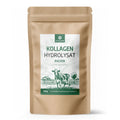

19 products


Collagen in our bodies
Collagen is essential for the structure of the skin and is also important for bones, cartilage and teeth. However, these are different types of collagen.
Collagen production decreases with age, however – consequences include, amongst other things, weak connective tissue and wrinkles.
Collagen is often mentioned in connection with face creams, but it can also be taken in powder form. Find out here how it is produced and taken.
How collagen powder is produced
Collagen powder is usually produced from animal-based products. By-products from slaughter, such as skin, bones and cartilage from pigs, cattle, poultry and fish, are used for this purpose. These by-products are boiled down. The collagen extracted is then processed into a powder or a liquid for ampoules.
However, it is now possible to produce collagen from non-animal sources. This involves using genetic engineering to extract collagen from bacteria, such as yeast. Although this process is not yet widely used, it is becoming increasingly popular in the field of collagen production.
The beneficial effects of collagen
Collagen is a naturally occurring component of the body. It forms part of the connective tissue and helps, for example, to keep the skin firm. It accounts for around 30 per cent of the total protein in our bodies. It also plays a major role in providing structural stability and is therefore a key component of our bones, cartilage and teeth, as well as our ligaments and tendons. Due to its functions, collagen is often referred to as the body’s ‘glue’.
Unfortunately, collagen production declines with age, leading to wrinkles and sagging skin. However, taking collagen powder can help stimulate production.
The correct dosage
To consume a healthy amount of collagen every day, you would need to eat a great deal of animal products such as meat. However, this would mean eating so much that the amount consumed would exceed the recommended daily intake of meat. Dietary supplements can help to meet your daily requirements. Collagen powder can easily be mixed into drinks and consumed throughout the day. Athletes in particular are advised to take additional collagen to support their bones, muscles and tissues.
Depending on individual needs, a daily dose of approximately 2g to 10g of collagen is recommended. Although there are hardly any known side effects, you should nevertheless not exceed this recommended intake.
Collagen and its importance in sport
Collagen powder is hailed as a miracle cure. The ingredient is particularly popular in the beauty and skincare sectors. However, the term is also frequently encountered in the context of sport. But how are collagen and sport linked?
According to studies, regular intake by athletes is said to help reduce body fat. It also speeds up recovery and facilitates a quicker return to sport following an injury.
Collagen is therefore very popular as a dietary supplement in this field. However, collagen is not always taken ‘on its own’; it is also possible to take supplements containing, for example, vitamin C, as this stimulates collagen production in the body.
Collagen powder should not be taken in excessive doses. Whilst no serious side effects have yet been observed, nausea, dizziness, stomach ache and headaches have been reported in isolated cases. You should therefore ensure you stick to the recommended intake.
Buy collagen powder
You can buy collagen powder in Switzerland from the Vitalove shop. Collagen powder helps you to supply your body with collagen in the form of dietary supplements, as the body’s own production declines with age. Collagen plays a major role in a wide variety of processes within our bodies and acts as a kind of ‘glue’. The word originates from Greek; the individual parts of the word translate roughly as ‘glue’ and ‘to bring forth’.
At Vitalove, you can buy more than just collagen – you’ll find many other products in our shop. We specialise entirely in health and the healthy diet that goes with it, and bring these benefits to your home through our products. Place your order today.
Frequently asked questions
Wie ist die Wirkung von Collagen?

